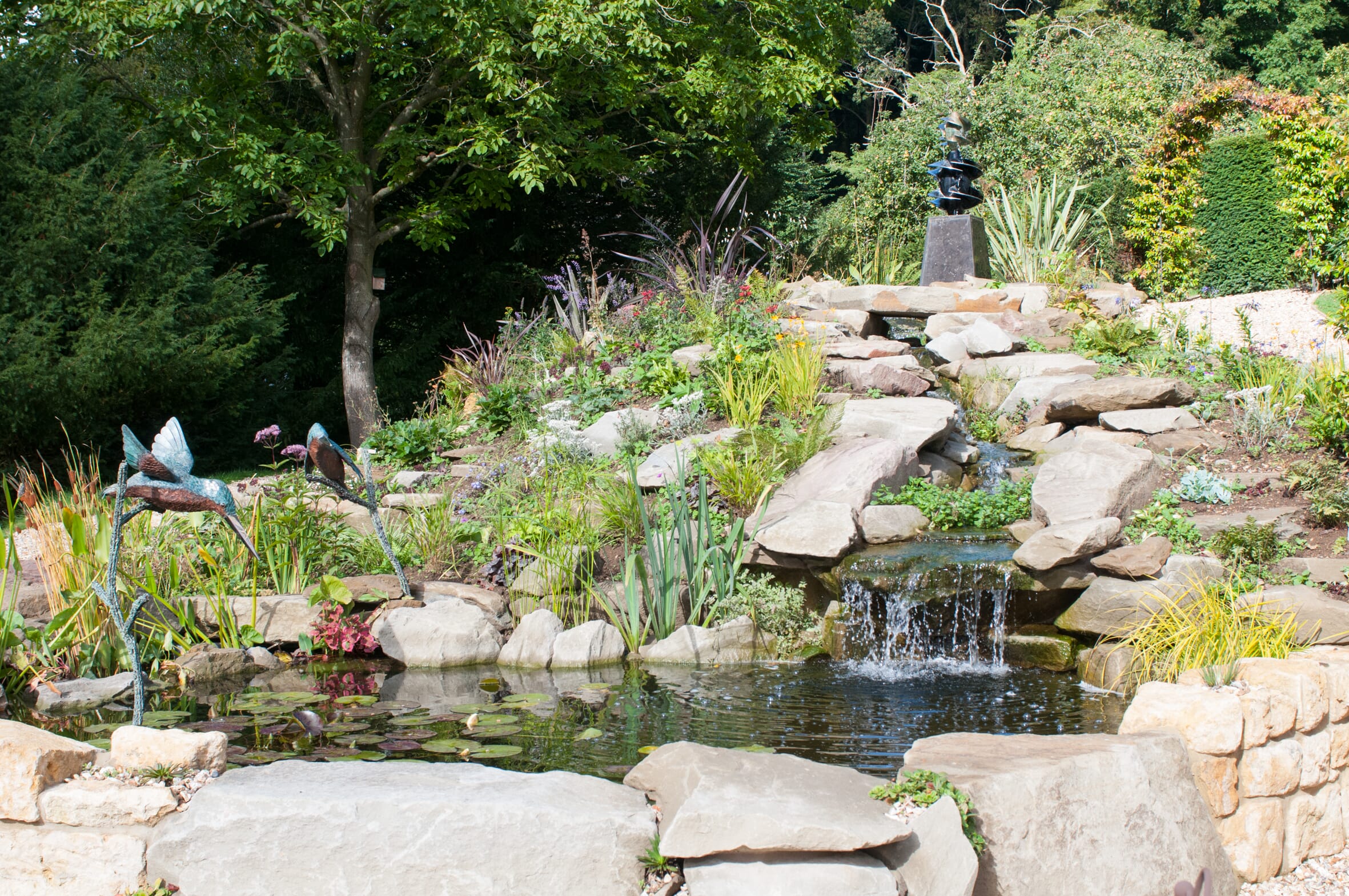
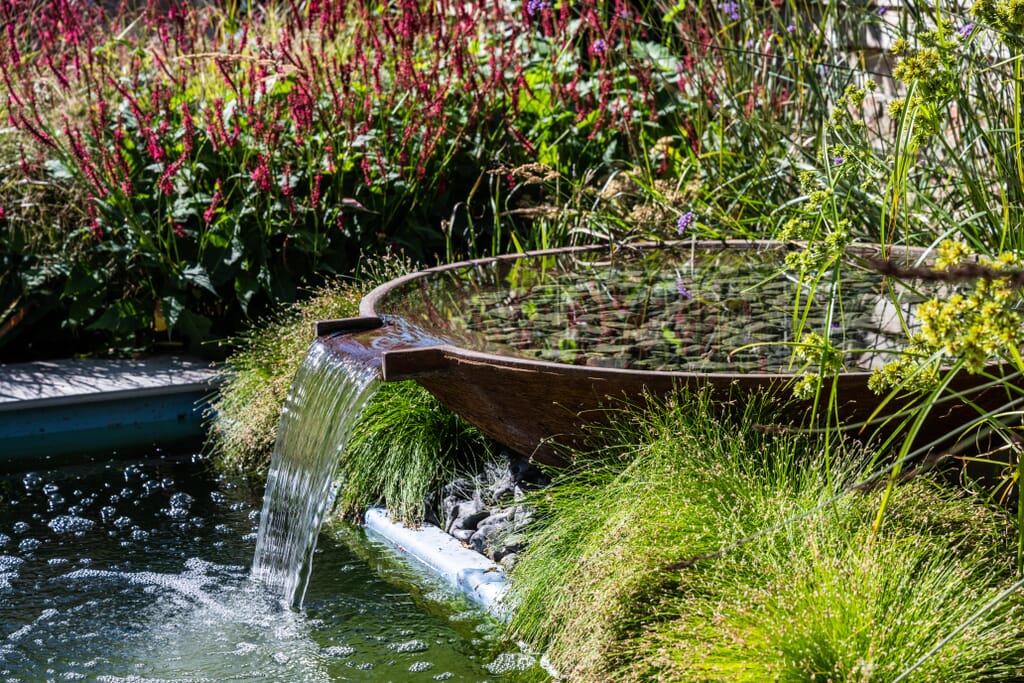
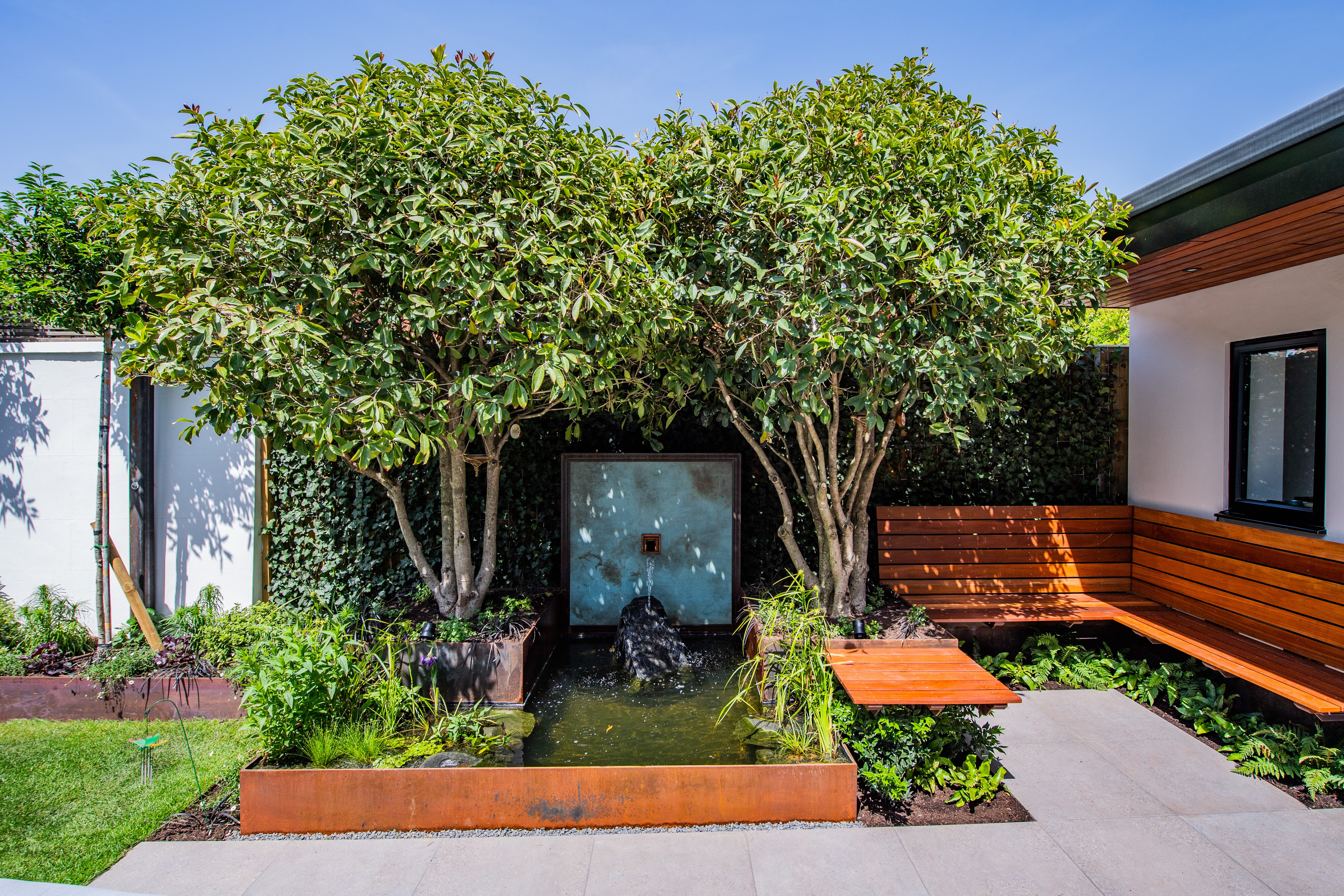
Imagine stepping into your garden and hearing the gentle sound of water, sunlight dancing across the surface of a perfectly still pond, and dragonflies skimming above the lilies. A place that feels peaceful, restorative, and entirely your own.
At Gardens by Keltie & Clark, we believe a water feature can transform not only the look of a garden but the way you use it. We work with you to create a space you’ve always imagined – one that draws you outside more often, encourages you to pause and unwind, and enhances the beauty and value of your home.
From the first sketches to the final plant in the water, we design, build, and plant every pond ourselves, ensuring a seamless process and a flawless finish. Here’s how…
A successful pond design starts with listening – we get to know how you want the space to feel, how you’ll interact with it, and how it will sit within the rest of the garden. We then consider the technical details, site conditions, and visual impact before moving into construction.
The right location makes all the difference in how a pond looks and performs. Many clients choose to position their pond close to a seating terrace so they can enjoy the reflections and movement from the comfort of a favourite chair. Others prefer a pond in a more secluded area – a destination within the garden where the walk there becomes part of the experience. We will help you to understand where to locate your pond for maximum enjoyment.
Sunlight is essential for most pond plants to thrive. It keeps the ecosystem in balance, encourages aquatic plants to flourish, and helps maintain stable water temperatures. Shade from overhanging trees not only limits sunlight but can create maintenance issues from falling leaves and, potentially, root damage to liners. Too much sunlight can also cause unwanted algae blooms so methods of controlling this such as surface pond plants or chemicals to keep the pond clear can be discussed depending on the type of pond and its ecosystem.
Practicalities matter too. Access to electricity for pumps, lighting, or filtration should be factored in from the start, along with the surrounding ground levels. We avoid areas with a high water table or spots where rainwater collects naturally, as these can cause structural problems or introduce unwanted run-off into the pond.
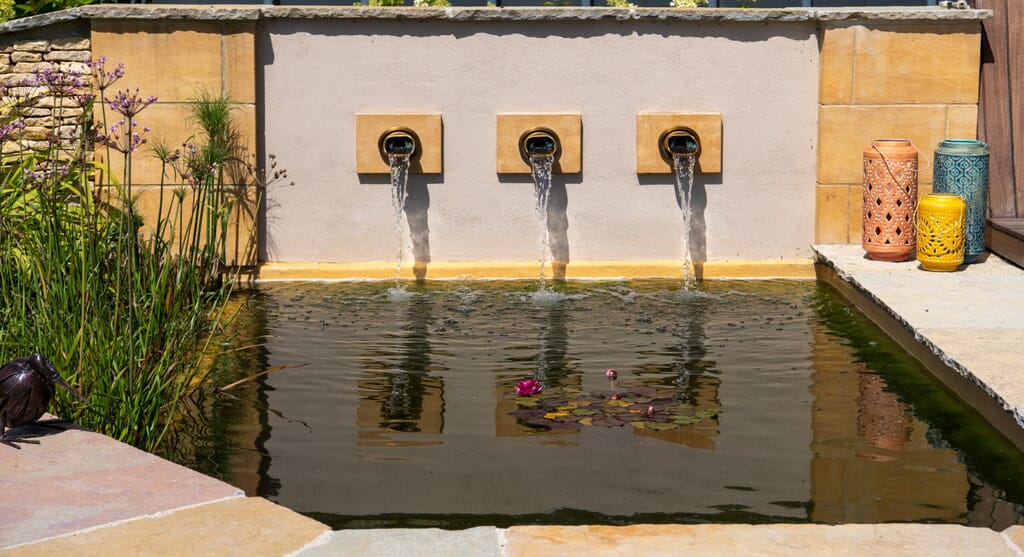
Your pond should look like it belongs – enhancing the lines of the garden and harmonising with the style of your home.
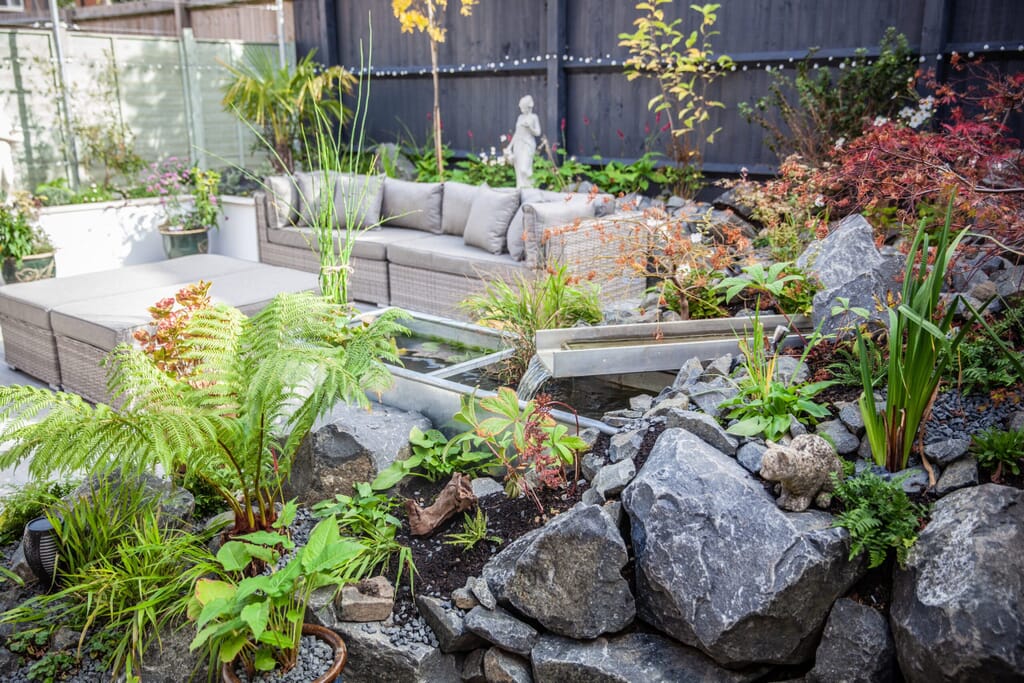
If design is where your ideas take shape, construction is where they come to life. Because our landscaping and construction team work entirely in-house, we control every stage of the build, from groundworks to finishing touches.
We start with precision excavation, shaping the pond to the agreed design and ensuring the ground is stable. The base is prepared to protect the liner and prevent punctures. We then install the chosen liner, fit any pumps or filtration systems, and build in hard landscaping elements such as stone edging, decking, or stepping stones. Finally, we prepare planting shelves and zones before filling the pond with water and beginning the planting phase.
The liner is one of the most important choices for ensuring durability and performance. We will guide you through the options, which might include:
Each option has its own strengths, and we’ll help select the one that matches your pond’s purpose, style, and setting.
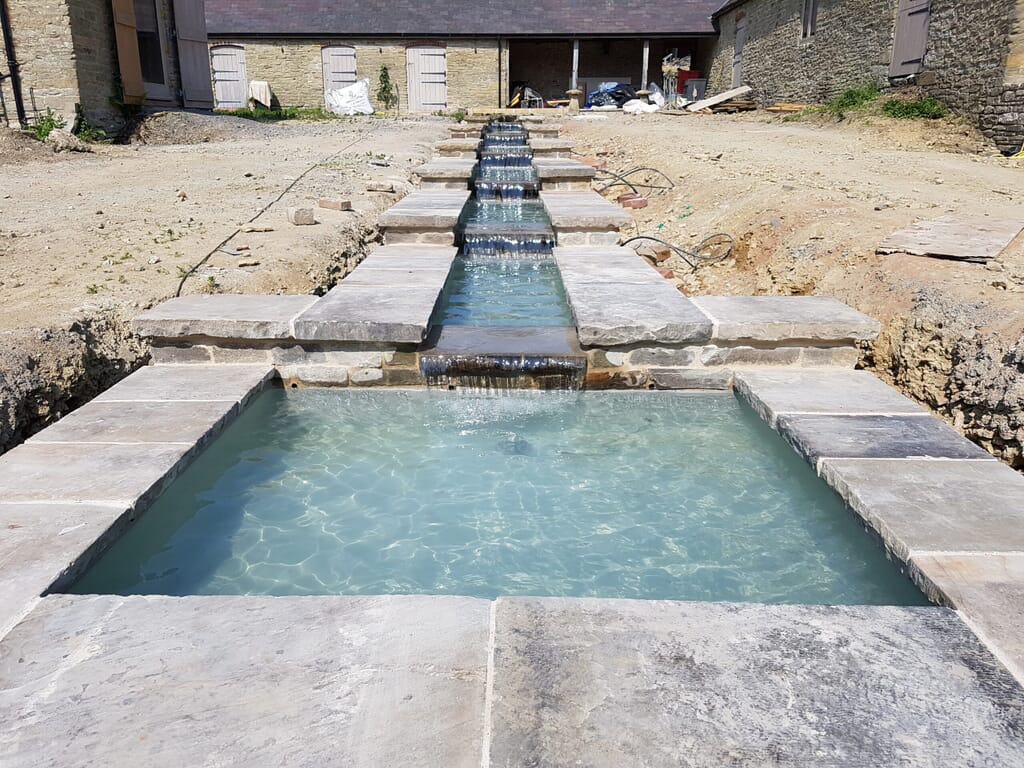
Planting is where the magic happens – transforming a structural pond into a living, breathing part of the garden. Our pond planting designs look beautiful year-round, are ecologically beneficial, and low-maintenance where possible.
It is important to consider every layer of planting, including:
Oxygenators such as Ceratophyllum demersum and Elodea canadensis work beneath the surface, keeping the water clear and balanced. These form the invisible backbone of the pond’s health.
Marginal plants like Iris pseudacorus, Pontederia cordata, and Carex elata frame the water’s edge, soften hard landscaping, and provide shelter for wildlife. Their vertical accents and seasonal flowers add interest and structure.
Floating plants such as Nymphaea water lilies create a serene surface display, while shading the water to reduce algae. The choice of lily variety allows us to coordinate colours and flowering times with the rest of the garden.
Bog and moisture-loving plants extend the planting scheme beyond the pond, blending it into the surrounding landscape. Plants such as Astilbe and Ligularia thrive here, providing lush foliage and long-lasting blooms.
Every scheme is bespoke – we select plants that suit your pond’s depth, light levels, and style, ensuring they look as though they have always belonged there.
A pond designed and built with skill becomes a living part of the garden – one that matures gracefully, attracts wildlife, and provides endless enjoyment. At Gardens by Keltie & Clark, we combine design flair, construction expertise, and horticultural knowledge to create ponds that are as enduring as they are beautiful.
Ready to create your perfect garden pond?
Contact Gardens by Keltie & Clark to discuss your ideas – we’ll help to shape the ideal pond design for your garden.